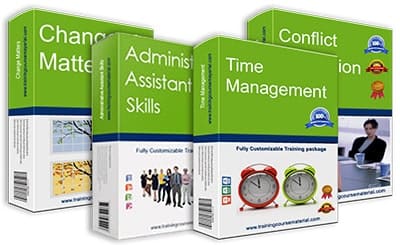
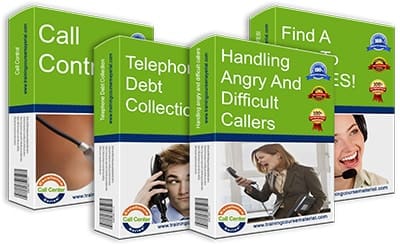
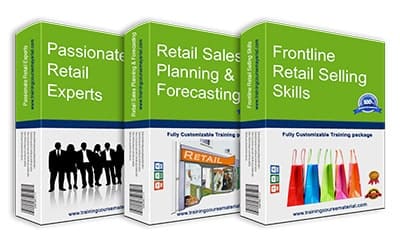
"Save time, effort, and deliver Great In-house Training!"
Our instant-download training materials make it easy to create valuable learning experiences in minutes.

Our instant-download training materials make it easy to create valuable learning experiences in minutes.

Our customers love how our materials come fully prepared, saving trainers significant time and effort in planning.

Trainers appreciate the flexibility to easily adapt our courses to specific industries, roles, or team objectives.

Real-world scenarios, role-plays, and practical exercises ensure trainees remain engaged and can apply their learnings in real situations.
Transformative training materials that elevate team performance!







Crafting effective training materials takes time—and when you’re managing a packed schedule, it’s easy to feel stuck.
Spending hours creating training materials only to wonder if they’ll land well? Without quality resources, keeping your audience engaged is a challenge.
Get instant access to polished, ready-to-use training packages. Save time, ensure impactful delivery, and enjoy big savings with our training materials library—all designed to make every session a success!

Developed by seasoned professionals, each course incorporates best practices and effective learning strategies.

Suitable for in-person, virtual, or hybrid formats, making it easy to train in any setting.

Once downloaded, the materials are yours to rebrand & use indefinitely, offering a valuable, reusable resource for future training needs.
Everything you need to deliver a professional training

Elevate learning experiences with a meticulously crafted, professionally designed PowerPoint slide deck, ensuring engagement for trainees of all proficiency levels.

Diverse supplementary training materials and aids to assist in both instructing and reviewing various exercises, activities, and games. Additionally, a lively final review game styled after Jeopardy adds an entertaining conclusion to your training program.
Providing explicit, stage-by-stage guidance along with valuable tips and suggestions on delivering each slide with confidence and effectiveness.
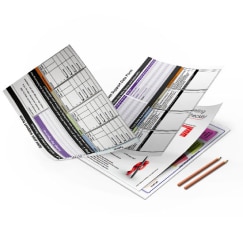
Tailored forms created to support and solidify the training, providing participants with practical aids they can implement in their work environment to apply newly acquired concepts (Available in selected training material packages).
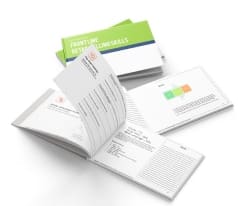
This all-inclusive Workbook serves as a valuable reference guide for your class attendees, providing quick access to key information in the future.

To equip you with everything necessary for a polished and thorough training program, each complete training course material package comes bundled with extra support documents. These range from evaluation forms to five diverse certificate templates, which you can personalize and distribute to your participants upon completion of the training.
Explore our comprehensive training materials for teams.
Our modular course design allows you to easily rearrange or omit sections to create a training experience perfectly tailored to your audience.
Each program includes clear, measurable learning outcomes, helping trainees understand exactly what they will achieve by the end of the course.
Training packages are designed to build real-world competencies, helping your team apply skills immediately in their roles.
I have purchased several training courses over the past few years. I usually create my own content, but I have to say that I was impressed by the quality of the content. The courses are visually appealing, the learning objectives are well constructed. Finally, an excellent balance between theory and practice. What is super interesting is that you can customize the content and put your branding and colors on it. I highly recommend it. Excellent value for money.

I just completed a three-day program ,using one of your two day packages. I was able to customize this program quite easily. The thorough work done by your team saved me a lot of time-and money. I am an experienced speaker/trainer with over 20 years in the field. Your programs provide the blueprint for what I need for my corporate and government training clients. I have seen similar programs advertised elsewhere for triple the price! I will return to your website as needed and will recommend your products and services to fellow consultants.

My course materials were professionally designed in a compelling manner that resonated with my learners and made my delivery even more impactful. Instructional design principles were also applied in the design of the course materials - it was build for adult learners and there were several application based learning models and exercises to use for learner engagement and retention. The customer service was also suburb and the entire purchasing process seamless from start to finish. I will definitely use Training Materials again!

I was looking for training material to enrich our current program in customer service. I am so glad i found the materials in this website. They are the complete package, and the bonus activities really helped me design a few new modules to incorporate in our training. The workbook is really clear, and participants liked it. The presentation is not boring, or a pile of words. They are designed with the audience in mind. The supporting materials are complete to implement a full training program. We are looking to expand into sales training, and will most probably buy from them again.

I have purchased the 3 training programmes of the Complete Communications Excellence Series. I consider that the GBP 99 cost represents excellent value for money and the materials are of a high quality. The programmes follow a logical sequence and are very comprehensive. As they are produced in MS Office formats, not password protected pdfs, they are very customisable and it has been easy to change the materials to UK spelling. The additional activities provided are very extensive and should prove useful once I have had time to explore them fully. The materials are going to save me hours of work as I prepare new training courses.

I’ll be honest, at the price point for the courses I wasn’t expecting too much. However, I have to tell you that I am impressed with the materials! I spent a couple of hours reviewing the student workbook and facilitators materials over the weekend and am excited about offering the Professional Sales program to one of my clients next month.

The only thing of higher quality than Training Course Material’s products is their commitment to customer engagement and support. On the few occasions when I’ve contacted their support team, their response have always been quick, professional and solution providing, so much so that in one of my courses on customer engagement, I’ve used them as an example of how to do it right.

I purchased your Train the Trainer program earlier this year and really love it. So does my client! Thanks so much for that opportunity!

I am super impressed. I am normally very picky (and very disappointed) in the quality of prepared content and this is just so well done.

TrainingCourseMaterial.com's programs provide comprehensive information in a visually interesting format. Participants benefit from interactive activities that reinforce the content and making learning fun.

I found materials very useful and dynamic. I like the whole package and I think that the mix of theory and exercises is the best I could find. Also the package is the good value for money.
I’m very impressed with the quality and professionalism of these training programmes. The content is structured and delivered in such a way as to facilitate a positive learning experience for the participants. The presentation and course notes are well-designed, fun and engaging which help to encourage a high level of participation.

I've been using training course materials for a number of years. They have some of the best products I seen on the market. Looking for engaging games, information and content Training Course Material is the way to go. Some of the best reviews I've ever received were after I put on presentations using training course material content. If you want to wow your clients, if you want to stand out in the crowd, if you just want to be the best you can be, use Training Course Materials.

As a trainer, I found the Time Management Training course very comprehensive and easy to follow. I especially like the experiential aspects of the course content delivery. Every module of this package is laid out extremely well, including easy to follow lists such supplies required.

I like your training material very much which I have used before and I have not been able to get the quality of content and graphics from other courseware providers like Training Course Material. Com offers. It is very interactive for the participants and easy to identify with. It helped me as a trainer to deliver in a way that kept interest and attention.

I am very pleased with the presentation. My team and I are becoming familiarized with the information. That said, we are very pleased what you have produced.

I was absolutely blown away by the quality of the training programs for such a low price.

TCM training materials are professionally written state of the art and masterfully done with up to date training aids and workbooks. Nowhere else could you find training materials of this quality for the price ... AAA+

The workshop is very well constructed, in a logical sequence and the content encompasses all the latest ideas and research. Ultimately a fantastic workshop to either deliver or participate in.

TrainingCourseMaterial.com have worked hard to create a totally tailored training solution for Mobile Telephony retail managers and sales teams. By creating high impact visuals and with varied and intelligent use of multi media visuals and activities, trainers were able to provide an accelerated learning solution that grasped the imagination of all types of learners and ensured the maximum return on training investment in this fast paced industry. Even the most seasoned sales professionals found something new and useable from their high energy training sessions and the course feedback was fantastic - consistently!

I have purchased the time management package and I found it really easy to customize to meet my training requirements. The sequence of content was very conducive to life -long learning, the slides were very attractive and helpful. The exercises included in the package were exciting and were well liked by the participants. I encourage other trainers to buy is as the price is reasonable when compared to other training packages available on the internet.
Just a short note to say that since purchasing a course from yourselves, I tried 2 other vendors' courses (from U.K.) and regret wasting money on them, as their materials seemed as if a ten year old had cobbled them together in terms of format and content. From now on, I shall be sticking with yourselves, as I enjoy your clean formats and more advanced content. Well done.
In Sales training, TrainingCourseMaterial.com’s ability to identify the specific areas of skill gap and build a program that directly addressed those gaps is very professional. That, coupled with the dynamic training events, has helped customers to drastically impact the skill level of their sales force and make a measurable impact on bottom line results .
I loved all the activities that helped me achieve a high level of interaction and energy keeping participants engaged . all the activities, ice breakers and case studies that achieved a fun learning environment while maintaining depth in the knowledge acquired.
Our training materials are designed for trainers and team leaders who want to elevate their team's performance. With instant downloads, you can start transforming your training sessions today.

Customers rave about the exceptional value, praising our high-quality materials at an affordable price.

Once downloaded, our materials can be reused, allowing you to deliver consistent training as your team grows and evolves.

Whether in-person, virtual, or hybrid, our training packages adapt seamlessly to any training environment.

All training materials are fully customizable, allowing you to tailor content to fit your organization’s specific goals and needs.

Each package includes professionally designed slides, guides, and workbooks, ensuring your presentation looks polished and engaging.

Access complete trainer guides, participant workbooks, and presentation slides, giving you everything you need for smooth, professional delivery.

Access expertly crafted slides, guides, and workbooks to enhance your training experience.

Real-world exercises that enable trainees to apply skills in their daily work.
See available instant download training material packages
How it works?




The most frequently asked questions around our training materials, for more faq's click the link below
How soon will I receive my training materials?
Immediately! Upon payment confirmation, you’ll get an email with download links.
In what format are the training materials provided?
All files come in MS Office format for easy editing.
Q: Can I get an invoice in my company’s name?
Absolutely! Contact us for an invoice, or modify it through our support team.
Can I view samples of the training materials?
Yes! Samples are available on each program’s page. Just scroll to the “Training Material Samples” section above.
Can I modify the course materials?
Yes! You can fully customize, copy, and adjust our materials for your training sessions. However, resale in any format is not permitted.
Is there support after purchase?
Yes, we provide ongoing support. Reach out anytime, or call our 24/7 toll-free number 1- 800- 561-9405 for assistance.
For more questions, feel free to contact us or click here for our full list of FAQs.
ContactI have purchased several training courses over the past few years. I usually create my own content, but I have to say that I was impressed by the quality of the content. The courses are visually appealing, the learning objectives are well constructed. Finally, an excellent balance between theory and practice. What is super interesting is that you can customize the content and put your branding and colors on it. I highly recommend it. Excellent value for money.
I just completed a three-day program ,using one of your two day packages. I was able to customize this program quite easily. The thorough work done by your team saved me a lot of time-and money. I am an experienced speaker/trainer with over 20 years in the field. Your programs provide the blueprint for what I need for my corporate and government training clients. I have seen similar programs advertised elsewhere for triple the price! I will return to your website as needed and will recommend your products and services to fellow consultants.
My course materials were professionally designed in a compelling manner that resonated with my learners and made my delivery even more impactful. Instructional design principles were also applied in the design of the course materials - it was build for adult learners and there were several application based learning models and exercises to use for learner engagement and retention. The customer service was also suburb and the entire purchasing process seamless from start to finish. I will definitely use Training Materials again!
I was looking for training material to enrich our current program in customer service. I am so glad i found the materials in this website. They are the complete package, and the bonus activities really helped me design a few new modules to incorporate in our training. The workbook is really clear, and participants liked it. The presentation is not boring, or a pile of words. They are designed with the audience in mind. The supporting materials are complete to implement a full training program. We are looking to expand into sales training, and will most probably buy from them again.
I have purchased the 3 training programmes of the Complete Communications Excellence Series. I consider that the GBP 99 cost represents excellent value for money and the materials are of a high quality. The programmes follow a logical sequence and are very comprehensive. As they are produced in MS Office formats, not password protected pdfs, they are very customisable and it has been easy to change the materials to UK spelling. The additional activities provided are very extensive and should prove useful once I have had time to explore them fully. The materials are going to save me hours of work as I prepare new training courses.
I’ll be honest, at the price point for the courses I wasn’t expecting too much. However, I have to tell you that I am impressed with the materials! I spent a couple of hours reviewing the student workbook and facilitators materials over the weekend and am excited about offering the Professional Sales program to one of my clients next month.
The only thing of higher quality than Training Course Material’s products is their commitment to customer engagement and support. On the few occasions when I’ve contacted their support team, their response have always been quick, professional and solution providing, so much so that in one of my courses on customer engagement, I’ve used them as an example of how to do it right.
I purchased your Train the Trainer program earlier this year and really love it. So does my client! Thanks so much for that opportunity!
I am super impressed. I am normally very picky (and very disappointed) in the quality of prepared content and this is just so well done.
TrainingCourseMaterial.com's programs provide comprehensive information in a visually interesting format. Participants benefit from interactive activities that reinforce the content and making learning fun.
I found materials very useful and dynamic. I like the whole package and I think that the mix of theory and exercises is the best I could find. Also the package is the good value for money.
I’m very impressed with the quality and professionalism of these training programmes. The content is structured and delivered in such a way as to facilitate a positive learning experience for the participants. The presentation and course notes are well-designed, fun and engaging which help to encourage a high level of participation.
I've been using training course materials for a number of years. They have some of the best products I seen on the market. Looking for engaging games, information and content Training Course Material is the way to go. Some of the best reviews I've ever received were after I put on presentations using training course material content. If you want to wow your clients, if you want to stand out in the crowd, if you just want to be the best you can be, use Training Course Materials.
As a trainer, I found the Time Management Training course very comprehensive and easy to follow. I especially like the experiential aspects of the course content delivery. Every module of this package is laid out extremely well, including easy to follow lists such supplies required.
I like your training material very much which I have used before and I have not been able to get the quality of content and graphics from other courseware providers like Training Course Material. Com offers. It is very interactive for the participants and easy to identify with. It helped me as a trainer to deliver in a way that kept interest and attention.
I am very pleased with the presentation. My team and I are becoming familiarized with the information. That said, we are very pleased what you have produced.
I was absolutely blown away by the quality of the training programs for such a low price.
TCM training materials are professionally written state of the art and masterfully done with up to date training aids and workbooks. Nowhere else could you find training materials of this quality for the price ... AAA+
The workshop is very well constructed, in a logical sequence and the content encompasses all the latest ideas and research. Ultimately a fantastic workshop to either deliver or participate in.
TrainingCourseMaterial.com have worked hard to create a totally tailored training solution for Mobile Telephony retail managers and sales teams. By creating high impact visuals and with varied and intelligent use of multi media visuals and activities, trainers were able to provide an accelerated learning solution that grasped the imagination of all types of learners and ensured the maximum return on training investment in this fast paced industry. Even the most seasoned sales professionals found something new and useable from their high energy training sessions and the course feedback was fantastic - consistently!
I have purchased the time management package and I found it really easy to customize to meet my training requirements. The sequence of content was very conducive to life -long learning, the slides were very attractive and helpful. The exercises included in the package were exciting and were well liked by the participants. I encourage other trainers to buy is as the price is reasonable when compared to other training packages available on the internet.
Just a short note to say that since purchasing a course from yourselves, I tried 2 other vendors' courses (from U.K.) and regret wasting money on them, as their materials seemed as if a ten year old had cobbled them together in terms of format and content. From now on, I shall be sticking with yourselves, as I enjoy your clean formats and more advanced content. Well done.
In Sales training, TrainingCourseMaterial.com’s ability to identify the specific areas of skill gap and build a program that directly addressed those gaps is very professional. That, coupled with the dynamic training events, has helped customers to drastically impact the skill level of their sales force and make a measurable impact on bottom line results .
I loved all the activities that helped me achieve a high level of interaction and energy keeping participants engaged . all the activities, ice breakers and case studies that achieved a fun learning environment while maintaining depth in the knowledge acquired.
Save over $1500 and Get each full program for under $99.00 & 6 Mini Courses free
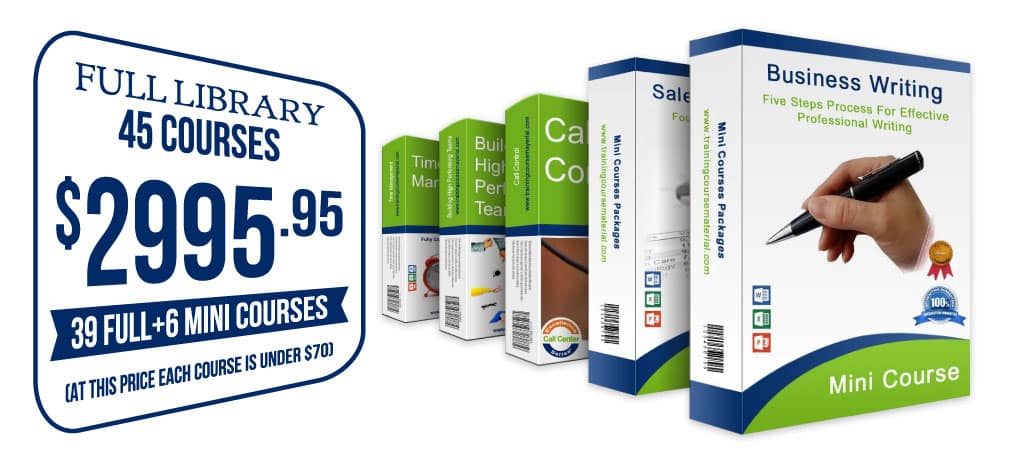
To discover how our training course materials can help you boost engagement, deliver impactful training, and enhance your team’s knowledge on the topics that matter most to you, explore our frequently asked questions, or reach out to us directly for more information.
And don’t miss our testimonials page to see what trainers, business professionals, team leaders, and consultants are saying about their experiences with us!